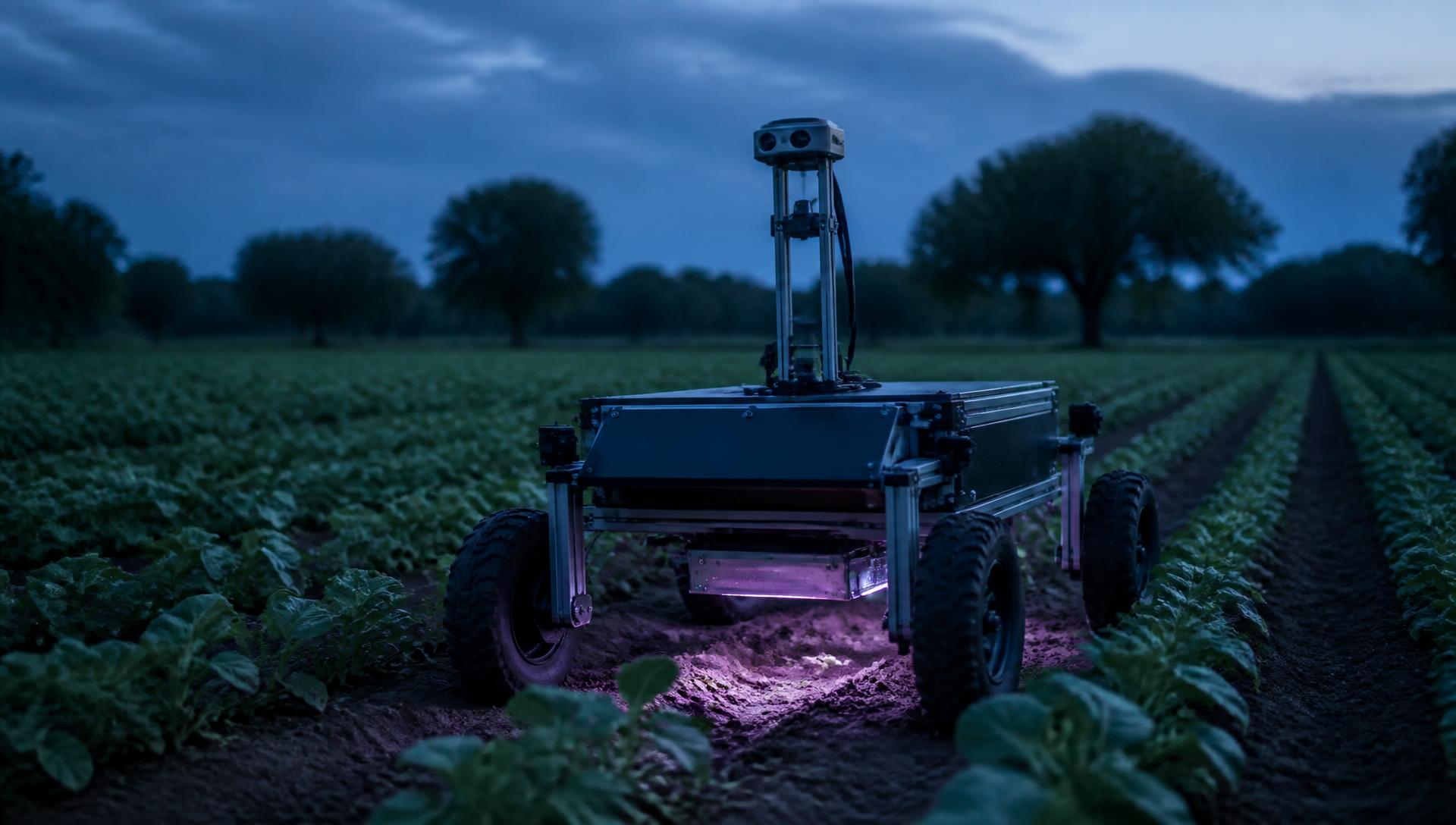
Spica UV Rover
A modular robotic platform for precision agricultural intervention.
01The agricultural challenge
Broad interventions, uneven problems.
Agricultural interventions are often applied uniformly across a field, even when the underlying problem — such as fungal disease pressure — is not uniform.
Uniform application is a practical response to a hard constraint: conventional machinery cannot easily distinguish between zones, or return to a specific plant at the right moment. That constraint is what robotics can change.
02The robotic response
Move precisely. Sense the row. Intervene where it matters.
A robotic platform can operate at a scale conventional machinery cannot: along a row, at a plant, within a defined treatment zone.
01
Repeatable
A machine can repeat the same operation with consistent geometry and timing.
02
Targeted
Interventions can be limited to defined zones instead of entire fields.
03
Instrumented
Every pass can be sensed and recorded, which makes iteration possible.
03How the UV Rover works
Navigate. Detect. Position. Treat. Continue.
The operating sequence is deliberately simple, and every step is currently supervised by a human operator.
01
Navigate
The platform moves along the row under semi-autonomous control with human supervision.
02
Detect
Camera and sensor systems build awareness of the surrounding crop and environment.
03
Position
The intervention module is positioned relative to the target zone.
04
Treat
Controlled UV-C delivery is applied to the defined treatment zone.
05
Continue
The platform advances and repeats the sequence along the row.
04UV-C system
Light as a targeted intervention.
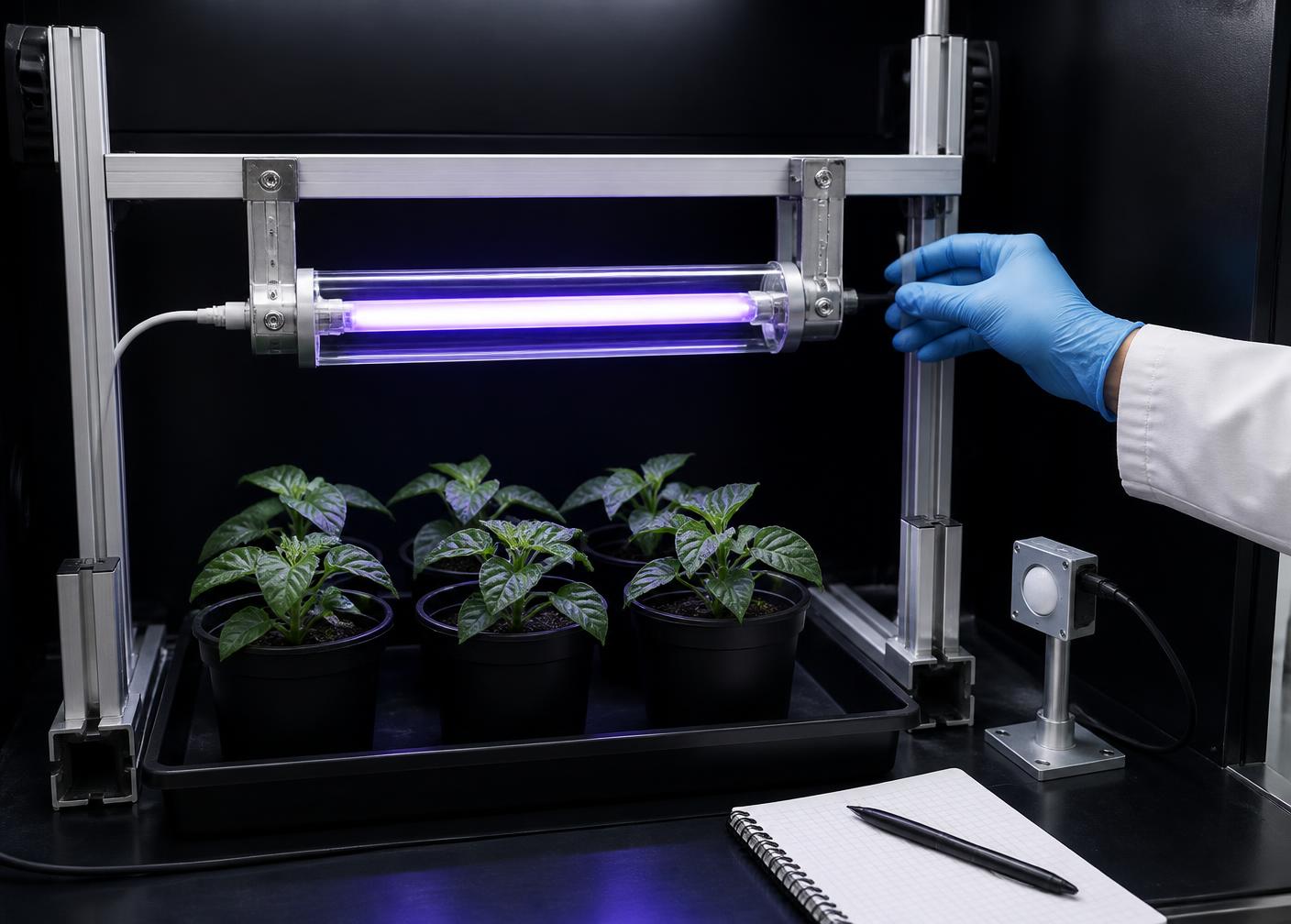
UV-C is being investigated as a targeted, chemical-free approach to managing fungal disease such as powdery mildew. Delivery is controlled: shielded emission, defined exposure geometry, defined treatment zone.
Claims policy
Laboratory testing has been completed, while field development and validation continue. Spica does not publish efficacy figures, and UV-C is not presented as a validated replacement for existing practice.
05Dual-Axis Drive
Steering and propulsion in one module.
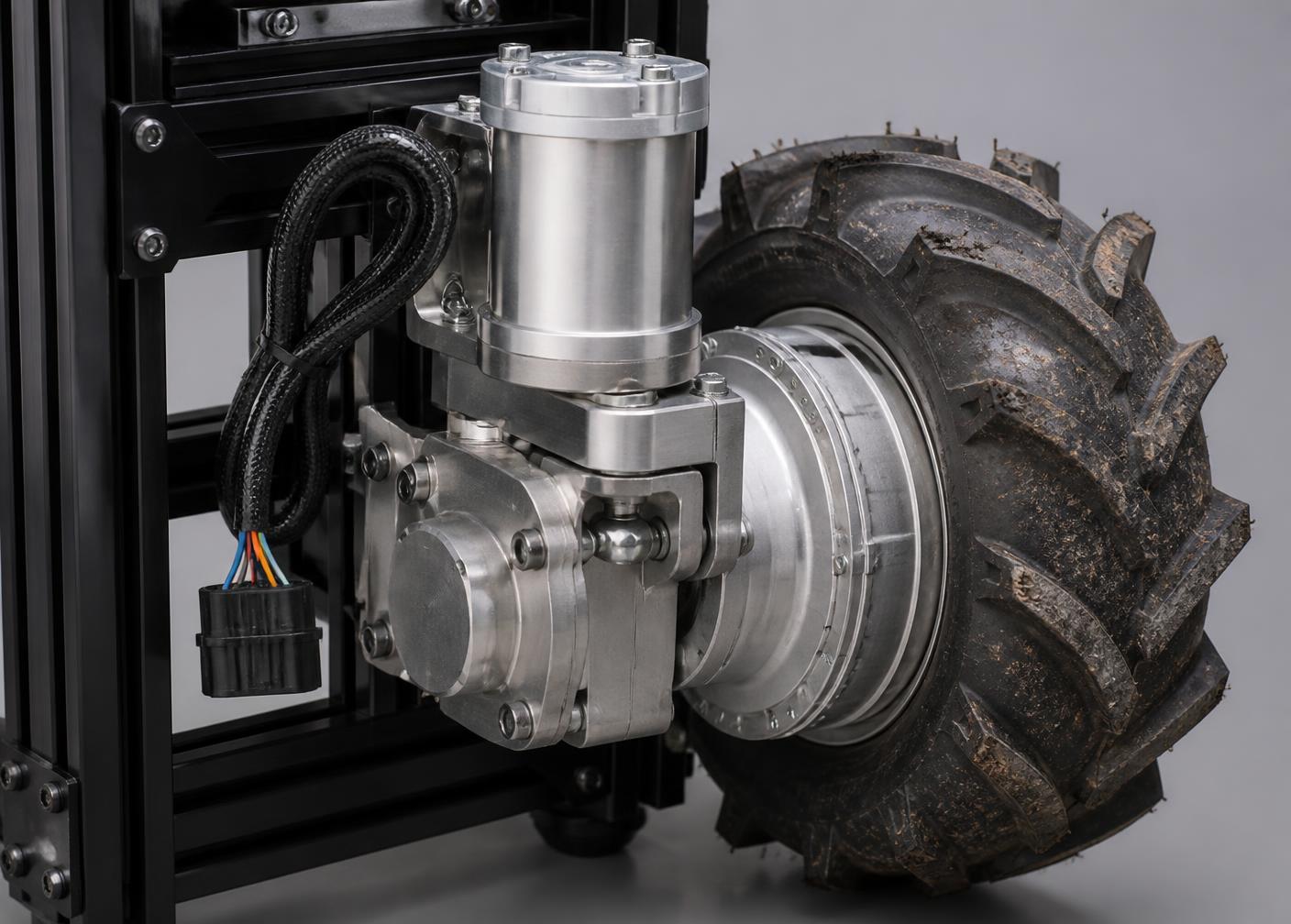
The Dual-Axis Drive (DAD) architecture combines steering and propulsion within a dedicated drive system.
Treating the drivetrain as a modular subsystem means maintenance and future iteration can be approached at the module level rather than requiring extensive intervention across the entire vehicle.
06Modular architecture
One base. Interchangeable tools.
The UV-C module is the first intervention tool built onto the platform. Defined mechanical, power and control interfaces allow further tools to be developed against the same base.
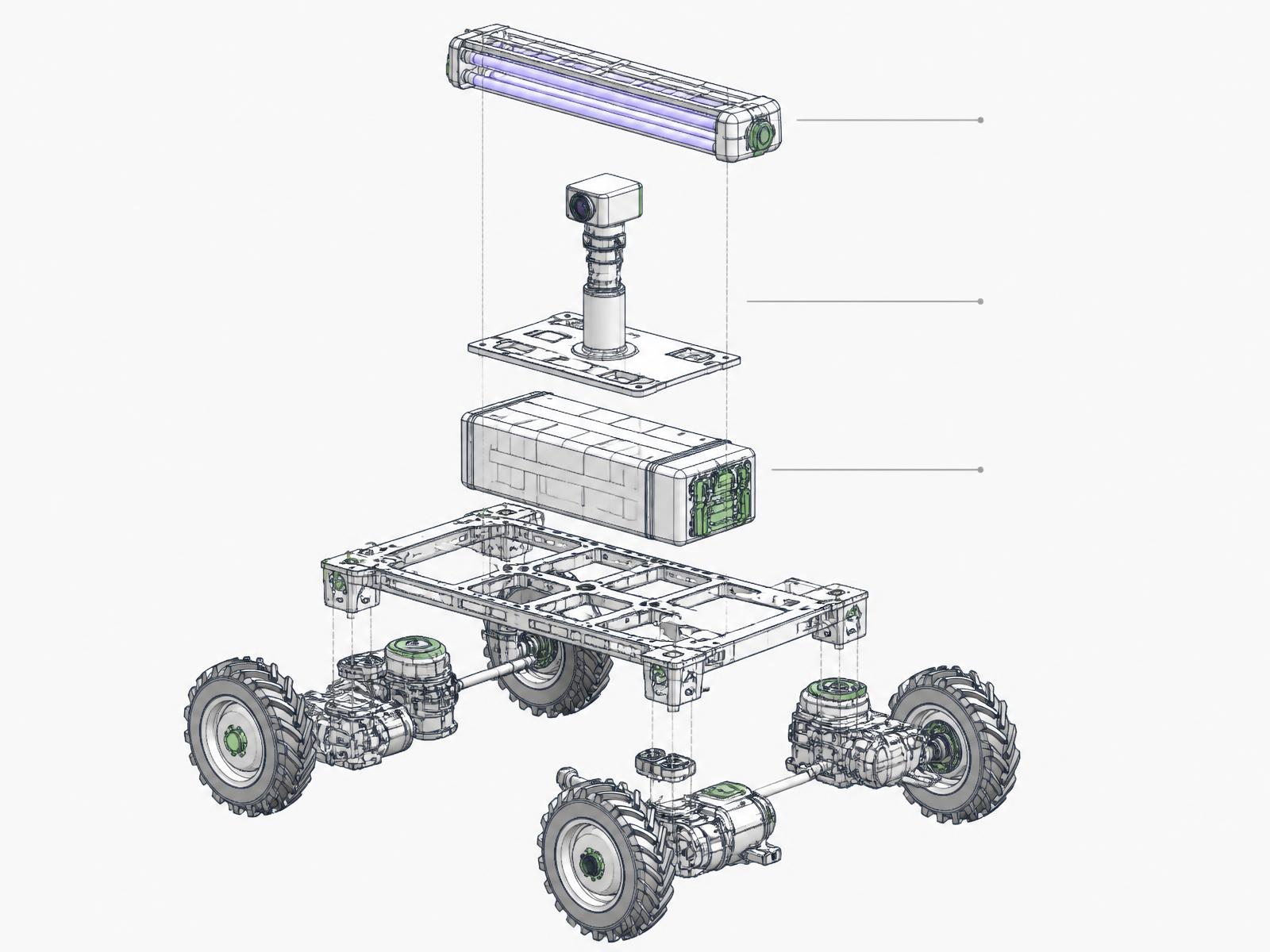
Layer 03 · Roadmap
Future treatment, sensing and agricultural tools
Additional intervention and sensing modules are part of the development roadmap and are not necessarily available today.
Layer 02 · In development
UV-C treatment module
The first intervention module: a shielded UV-C delivery system for targeted crop treatment.
Layer 01 · Prototype
Base robotic platform
Electric mobility, Dual-Axis Drive, power, perception and control — shared across every module.
07Current prototype
Semi-autonomous operation with human supervision.
The current system integrates autonomous/semi-autonomous drive, camera and vision, a UV-C treatment system and additional sensors and electronics.
01
Research
Technology developed through research at IIT Ropar.
02
Laboratory
UV-C treatment testing completed.
03
Prototype
Integrated robotic platform developed.
04
Early field prototype
Current development stage.
Current stage
05
Future
Field validation → optimization → application-specific deployment.
08Development roadmap
Where the platform is headed.
The following describes development direction. These are not completed products and are not commercially available.
Phase 01
Field validation
Extend testing of the integrated platform in real agricultural environments.
Phase 02
Optimization
Refine mobility, perception, control and UV-C delivery against field data.
Phase 03
Application-specific deployment
Configure the platform and modules around specific crop problems as validation allows.
—Work with Spica
Interested in the UV Rover?
We work with researchers, agricultural companies, growers and partners interested in field validation of the platform.